
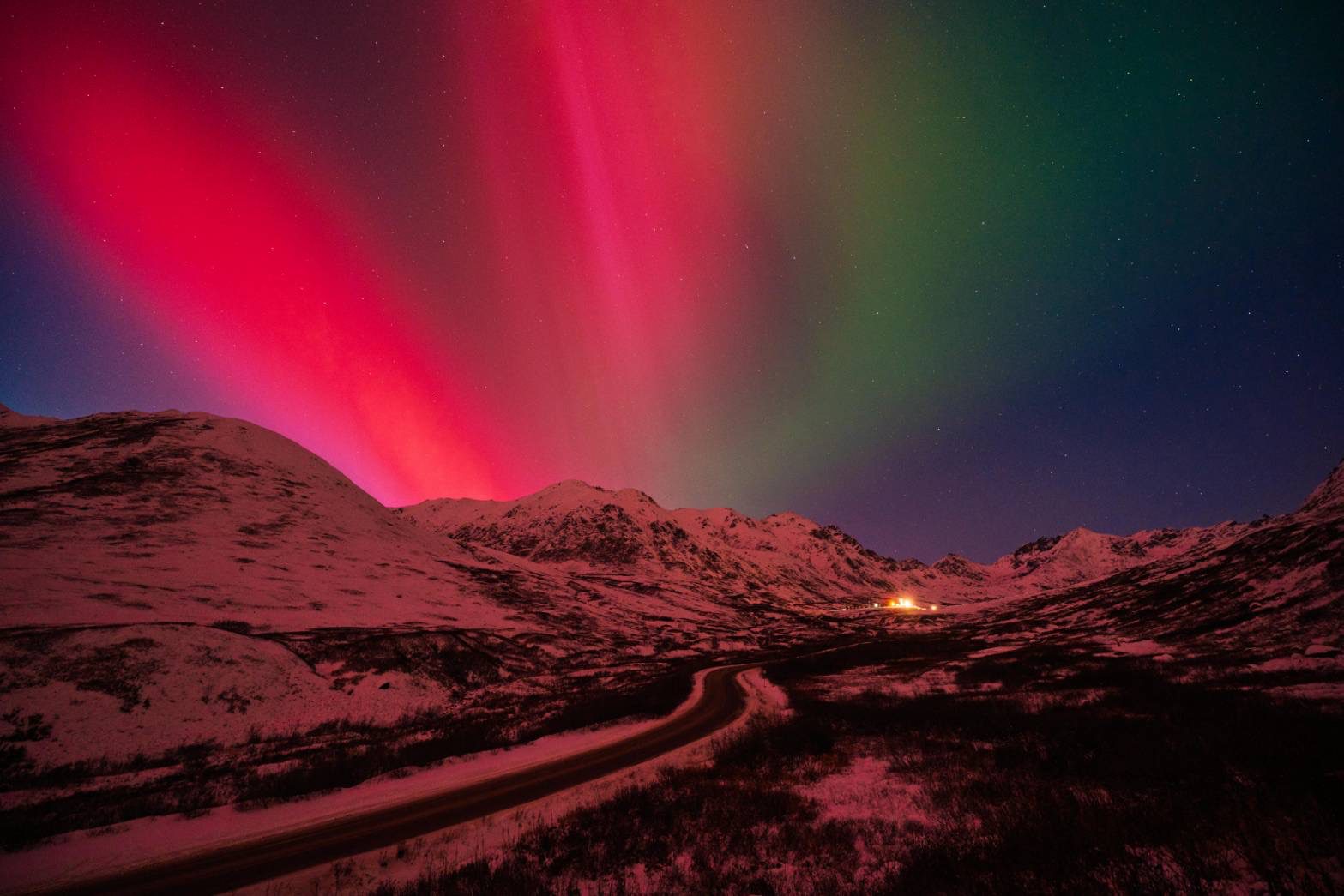
Everything you need to know about planning a northern lights elopement in Alaska, from the best time of year and locations to weather, photography, clothing, and everything in between.
Imagine standing together beneath a sky full of stars, surrounded by snow-covered mountains, when ribbons of green begin moving across the sky. You’re bundled up against the cold, holding hands with the person you just married, watching something neither of you will ever forget.
It’s easy to understand why couples dream about getting married beneath the northern lights.
But if you’re planning an Alaska elopement from thousands of miles away, you probably have quite a few questions. Can you actually plan a wedding around the northern lights? Where should you go? How cold will it be? And what happens if the aurora doesn’t show up?
Those are exactly the questions we’re going to answer.
First, a Little Hello From Me!
Hey, I’m Alex! I’m an Alaska elopement photographer and the person behind Avid Traveler Elopements.
My husband, Josh, and I live here in Alaska, and one of my favorite parts of what I do is helping couples experience this incredible place in a way that feels personal to them.
I believe your wedding day should be about so much more than beautiful photographs. It’s about the promise you’re making to each other, the memories you’re creating together, and beginning your marriage with intention.
And if that means venturing out into the Alaskan wilderness in the middle of the night, bundled in approximately twelve layers of clothing, hoping to catch the northern lights? I’m all for it.
But I also want you to have a wedding day you absolutely love, whether the sky puts on a show or not.
Planning a northern lights elopement is a little different from planning a traditional wedding. There’s more flexibility involved, a fair bit of unpredictability, and some logistics that are easy to overlook if you’ve never visited Alaska.
So, consider this your guide to making it happen.
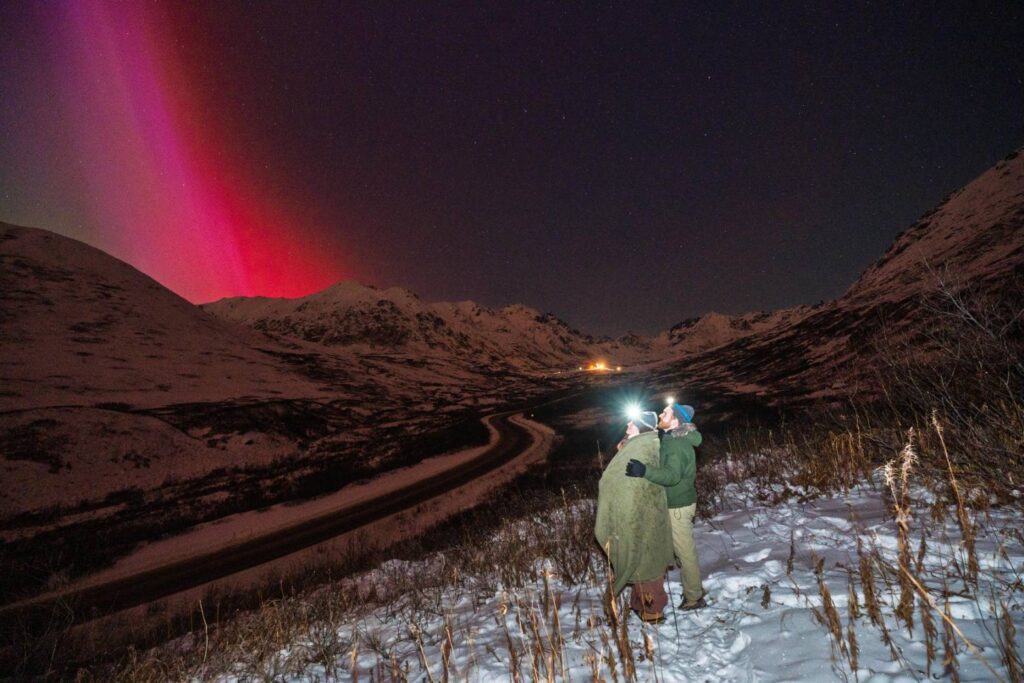
Can You Actually Elope Under the Northern Lights in Alaska?
Absolutely! But there’s one thing I want every couple to understand before planning an aurora elopement:
You can plan an incredible experience around the northern lights, but you can’t schedule the northern lights themselves.
Unlike booking a venue or choosing a ceremony time, the aurora isn’t something we can guarantee.
To see the northern lights, several things need to happen at once:
- There needs to be enough darkness.
- The aurora needs to be active and visible from your location.
- The sky needs to be reasonably clear.
- You need to be in the right place at the right time.
Even if an aurora forecast looks fantastic, cloud cover can completely obscure the display. On the flip side, you might have a relatively quiet forecast and suddenly find yourself watching green ribbons dance overhead.
It’s part of what makes the experience so special.
For this reason, I encourage couples to think of the aurora as one part of their Alaska wedding adventure, rather than the single thing that determines whether their elopement was successful.
And there are a few ways we can plan around that unpredictability.
When Is the Best Time to Elope Under the Northern Lights?
One of the first questions couples ask is whether they need to visit Alaska during the dead of winter to see the aurora.
Thankfully, no!
The northern lights occur throughout the year, but Alaska’s summer skies are too bright to see them. Once darker nights return, so do opportunities to watch them.
In general, Alaska’s aurora-viewing season runs from late August through April, although the exact viewing window varies by location.
Here’s how I’d think about each part of the season.
Late August Through September: Northern Lights Without Deep Winter
This is one of my favorite options to recommend to couples who love the idea of seeing the aurora but aren’t necessarily dreaming of a snowy wedding.
Depending on where you go and when you visit, you can experience:
- Fall colors across the Alaskan landscape
- Mountains, alpine lakes, and tundra
- Milder daytime temperatures than midwinter
- Opportunities for hiking and outdoor activities
- Northern lights viewing after dark
September is particularly interesting because the nights are becoming longer, and the weeks around the fall equinox can bring favorable conditions for auroral activity.
The tradeoff? Nights aren’t as long as they are during winter, and snow isn’t guaranteed.
If you envision exchanging vows among golden autumn colors before heading out to chase the northern lights later that night, September could be a wonderful fit.
October Through February: Long Nights and Winter Landscapes
If your Pinterest board is filled with snowy mountains, cozy cabins, fur-lined coats, and green lights dancing over an icy landscape, this is probably the season you’re imagining.
As winter settles in, Alaska experiences dramatically shorter days and longer nights.
That creates more hours of darkness for aurora viewing, particularly in northern Alaska.
But winter comes with some important considerations.
Depending on where you travel, temperatures can fall well below zero. Roads can be icy, daylight for portraits may be limited, and certain outdoor locations may become inaccessible.
In places like Fairbanks, winter elopements require serious thought about staying warm, having a heated place nearby, and how much time you can comfortably spend outside.
The upside is that a winter elopement can be an absolutely beautiful combination of snowy scenery, a cozy indoor celebration, and a late-night aurora adventure.
March: One of the Best Months to Consider
If a couple asks me when to begin looking at dates for a northern lights elopement, March would absolutely be on my shortlist.
Here’s why.
March brings increasing daylight, which is wonderful for enjoying the scenery and taking wedding portraits during the day.
But the nights are still dark enough for aurora viewing.
You can often enjoy a snowy winter landscape without quite as much of the deep-winter darkness.
The spring equinox period can also be favorable for auroral activity.
Of course, March can still be extremely cold, especially in Interior Alaska, so don’t mistake longer days for warm weather!
April: Possible, but You Need to Be Strategic
Northern lights viewing is still possible in early-to-mid April, particularly farther north.
However, as daylight returns, the amount of usable darkness shrinks.
By late April, many locations are becoming too bright for dependable aurora viewing.
If seeing the lights is a major priority, I would generally favor an earlier date rather than trying to squeeze your wedding into the end of the season.
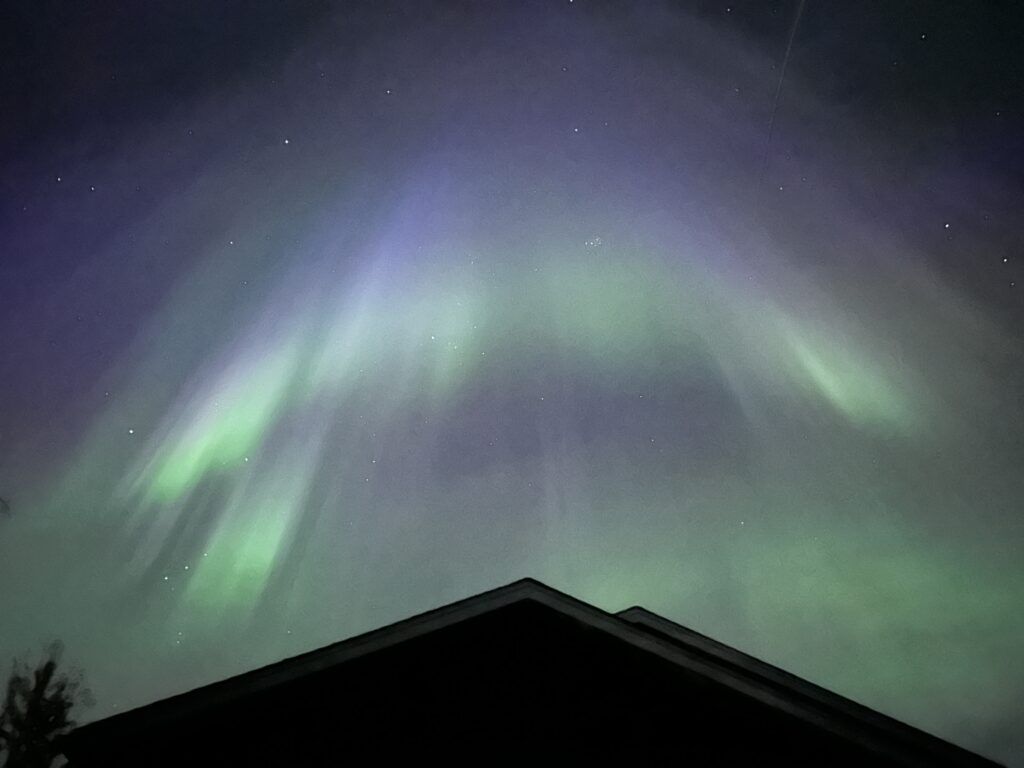
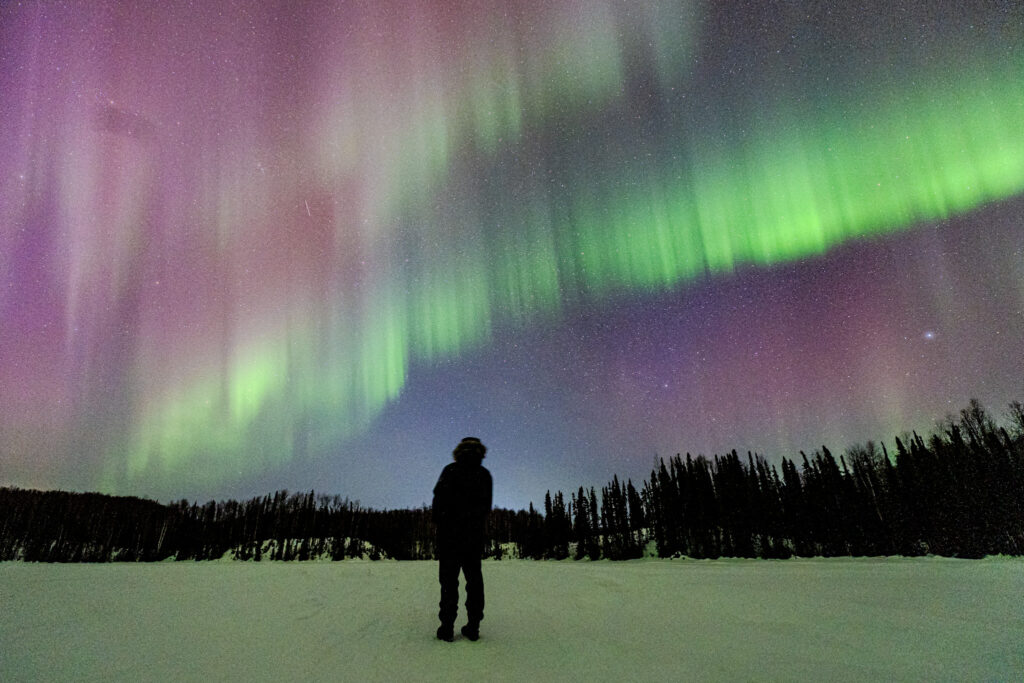
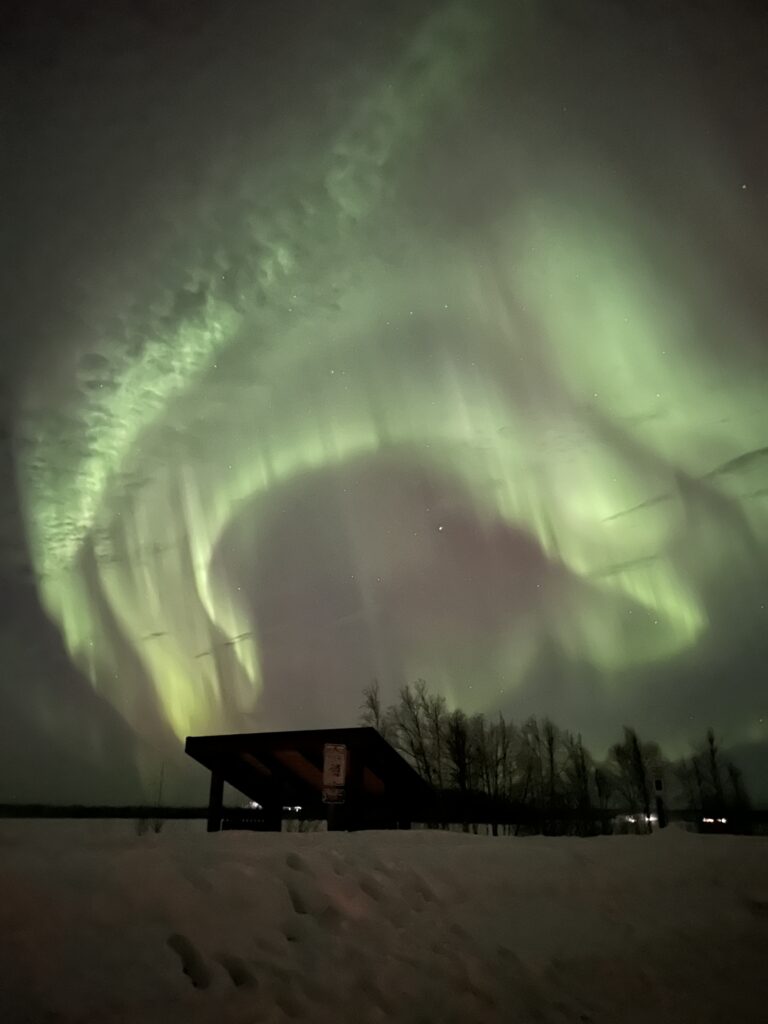
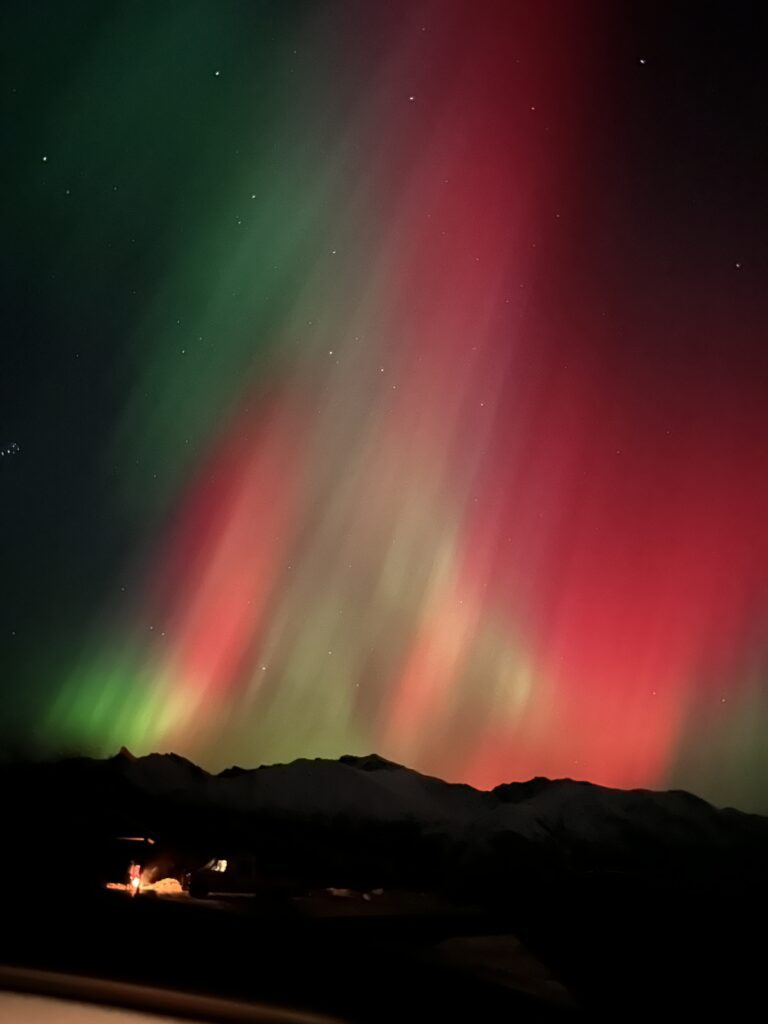
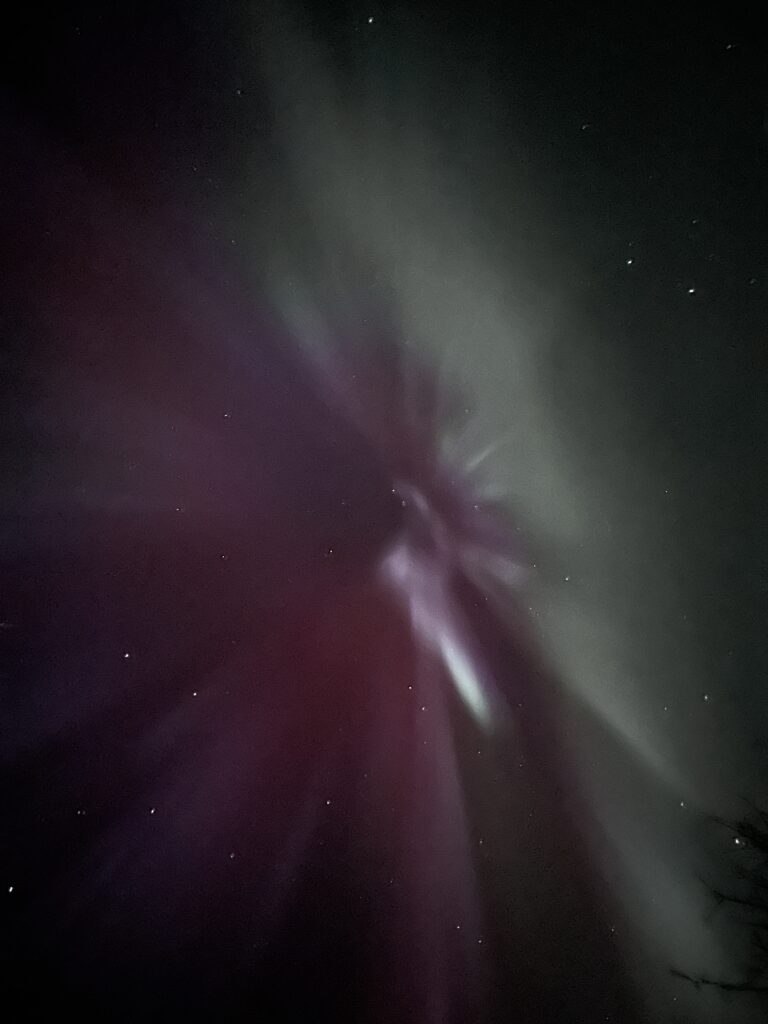
Two auroras are never the same! There are different colors, shapes, and speeds at which they dance through the sky. All of these photos were just taken on my iPhone in the Mat-Su area. This includes Willow, Hatcher Pass, Knik, Denai View South, and Meadow Lakes.
Where Should You Elope to See the Northern Lights in Alaska
This is one of the biggest decisions you’ll make.
Alaska is enormous, and not every beautiful Alaska elopement location is equally good for seeing the northern lights.
The best place for daytime wedding portraits might not be the best place for aurora viewing after dark.
That’s why I like to consider both parts of the experience when choosing a location.
Fairbanks: Best for Prioritizing Your Chances of Seeing the Aurora
If seeing the northern lights is one of your absolute top priorities, Fairbanks deserves serious consideration.
Fairbanks sits beneath the auroral oval, a region where northern lights activity is particularly common. Its Interior Alaska location also tends to offer more favorable clear-sky opportunities than many coastal areas.
In fact, Explore Fairbanks reports that visitors staying at least three nights and actively looking for the aurora have more than a 90% chance of seeing it during aurora season.
That’s encouraging, but keep in mind that it’s a regional tourism statistic, not a guarantee that the lights will appear during your ceremony or photography session.
Fairbanks is particularly appealing for couples who want:
- A winter wonderland wedding
- Access to established aurora-viewing areas
- Cozy cabins or lodges
- Heated aurora-viewing facilities
- Several nights dedicated to seeing the lights
- Winter activities like dog sledding or soaking in hot springs
Places around the Fairbanks area, including Chena Hot Springs and Cleary Summit, may be worth considering for aurora viewing depending on conditions, access, and photography permissions.
Fairbanks is also a great choice if you’re comfortable embracing the cold.
And I mean really embracing the cold!
Temperatures can drop far below zero, and planning around that reality is essential.
Palmer, Wasilla, and the Mat-Su Valley: Mountains and Aurora Possibilities
This is my home region, and it offers some absolutely beautiful possibilities for an Alaska elopement.
The Mat-Su Valley is surrounded by incredible mountains and landscapes, including the Chugach and Talkeetna ranges.
Areas around Palmer, Wasilla, and other parts of the valley can offer beautiful opportunities for daytime photography, with northern lights viewing later if conditions cooperate.
One thing I love about this region is how easily couples can build an experience that feels like a full Alaska adventure.
Imagine spending the day exchanging vows with mountain views, enjoying a picnic together, and exploring somewhere beautiful before heading back to your cabin for dinner.
Then, later that evening, we check the aurora forecast and see whether it’s worth heading back outside.
The biggest consideration is that aurora sightings in Southcentral Alaska are generally less consistent than in Fairbanks, and cloud cover can be a significant factor.
For couples who care just as much about dramatic mountains and their wedding-day experience as seeing the aurora, it’s an option worth exploring.
Anchorage: Convenient, but You’ll Want to Leave the City Lights Behind
Anchorage is Alaska’s largest city and a common arrival point for couples flying in from the Lower 48.
You can absolutely see the northern lights around Anchorage when conditions are right.
However, city lights can make faint aurora displays difficult to see.
For the best opportunities, you’ll generally want to travel somewhere darker with open views of the sky.
That could mean planning an elopement outside the city and having a separate aurora-viewing location in mind.
Anchorage is a convenient base, but I wouldn’t choose a bright downtown location if northern lights photography is the main priority.
Denali and Interior Alaska: For Couples Who Want Something Remote
If you’re dreaming of wide-open wilderness, mountain landscapes, and a sense of complete escape, Interior Alaska might be calling your name.
The Denali region can offer beautiful dark skies and spectacular scenery.
However, winter accessibility is a major consideration.
Some roads and areas of Denali National Park are not accessible to regular vehicles during winter, and lodging options can be much more limited than during the summer tourism season.
I’d approach this kind of elopement with careful location research and a realistic transportation plan.
Remote doesn’t automatically mean better, particularly when you’re driving at night in unfamiliar winter conditions.
Should You Have Your Ceremony Under the Northern Lights?
Here’s where I might suggest doing things a little differently than you originally imagined.
You absolutely can plan a nighttime wedding ceremony under the northern lights.
But personally, I think there are some major advantages to having your ceremony during daylight or twilight and treating the aurora as a separate experience.
Let me explain.
If your ceremony is scheduled for 10 p.m., there’s no guarantee that the northern lights will appear at 10 p.m.
They might show up at midnight.
They might make their appearance at 2 a.m.
Or you might spend the evening under an incredibly beautiful sky without seeing them at all.
Meanwhile, you’ve potentially sacrificed the opportunity for beautiful daytime portraits and the surrounding scenery.
Instead, imagine this:
You spend your afternoon getting ready together, exchanging personal vows with mountains behind you, and celebrating the commitment you’re making to each other.
You have beautiful photographs of your ceremony, your surroundings, and all the little moments that make the day yours.
Then you go back to your cabin, have a wonderful dinner, relax, and prepare for the possibility of a nighttime adventure.
If the aurora appears, you head outside together and make some completely different memories beneath the night sky.
To me, that sounds like the best of both worlds.
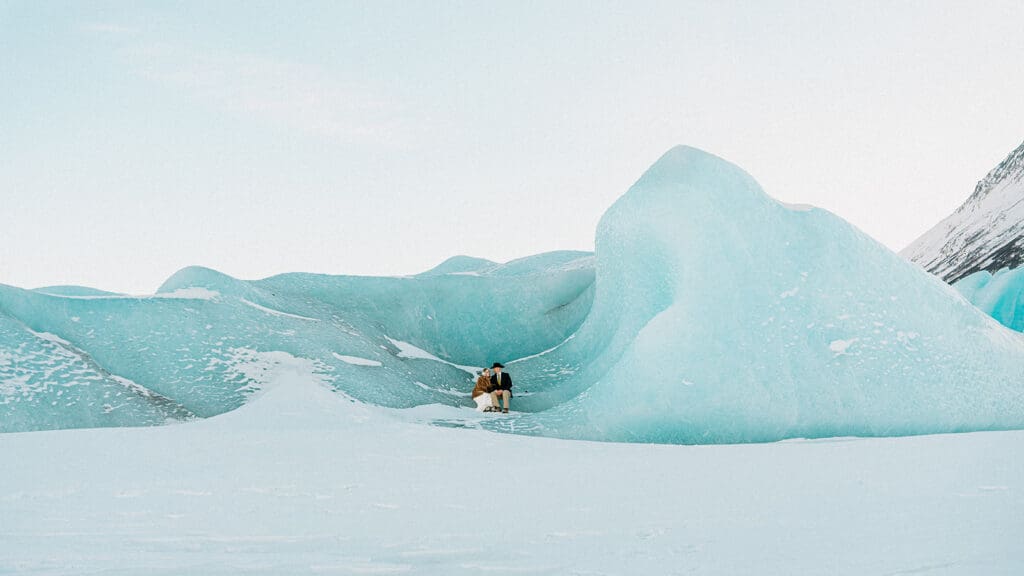
But What If We Really Want to Say Our Vows Under the Aurora?
We can absolutely build a plan around that vision.
I’d just encourage you to be flexible about the exact timing and whether the northern lights actually appear.
You might choose to exchange your legal vows earlier in the day, then share personal vows or letters under the night sky later.
Or you might plan a short nighttime ceremony with your officiant, understanding that the sky may be full of stars rather than dancing lights.
If a nighttime legal ceremony is your priority, everyone involved needs to understand the flexible schedule, including your officiant and any guests.
And if you’re hoping to photograph the ceremony in the dark, there are some important photographic considerations we’ll get to shortly.
How Many Days Should You Spend in Alaska for a Northern Lights Elopement?
This is probably one of the most important logistical decisions.
If seeing the northern lights is a major priority, I wouldn’t recommend flying into Alaska for just one night and expecting to see them.
Even during peak aurora season, clouds can roll in and cover the sky for an entire evening.
You might have beautiful aurora activity happening above you and never see it because of the weather.
My recommendation would be:
- Three nights: A reasonable starting point, particularly in Fairbanks.
- Four to five nights: A more comfortable window with additional opportunities for aurora viewing.
- A week: A wonderful option if you’d like to enjoy Alaska activities while allowing several nights for aurora watching.
Spending more time here gives you additional chances, not a promise.
And if you’ve never visited Alaska, there is so much more to experience than the northern lights alone.
Consider making your elopement part of a longer adventure instead of treating it like a quick overnight trip.
Should You Have a Backup Wedding Date?
Ideally, you should have flexibility built into your trip.
That doesn’t necessarily mean hiring an officiant, photographer, and other vendors to be on call for an entire week.
Instead, we can discuss a realistic approach to scheduling.
For example, you might book your wedding ceremony for a specific afternoon, with the possibility of a separate aurora photography session during an agreed-upon nighttime window.
If a forecast looks particularly promising on a different evening, we can discuss what flexibility is available in advance.
The key is having those conversations before you arrive.
A photographer’s availability, additional coverage fees, travel requirements, and weather policies all need to be considered.
What Time Do the Northern Lights Usually Appear?
Alaska’s northern lights are commonly observed between approximately 10 p.m. and 2 a.m., although they can appear earlier or later whenever the sky is dark enough.
Unlike sunset, there isn’t a single predictable time for the aurora.
You could be standing outside at 9 p.m. when a faint green glow appears.
Or you could be waiting until well after midnight before the sky begins moving.
Some displays last only a few minutes, while others come and go throughout the night.
That’s why I encourage couples to prepare for a potentially late evening rather than scheduling a brief, fixed photography window and assuming the lights will cooperate.
My Biggest Scheduling Tip: Don’t Exhaust Yourselves Before the Night Even Begins
Remember, this is your wedding day!
If you’re going to stay awake until 2 a.m., I’d rather you spend part of the afternoon relaxing than cram twelve activities into your itinerary.
Build in time for dinner, rest, and getting warm.
You don’t want to finally see the northern lights and realize you’re both too tired and cold to enjoy the moment.
What Is the Weather Like During a Northern Lights Elopement?
Alaska weather can vary dramatically depending on the month and location.
A September evening in Palmer is an entirely different experience from a January night in Fairbanks.
You might encounter rain, snow, strong winds, icy roads, or temperatures well below zero.
And sometimes, the most beautiful clear skies come with very cold temperatures.
The most important thing to understand is that clear weather matters just as much as auroral activity.
A high aurora forecast doesn’t help much if you’re standing beneath thick clouds.
That’s one reason location flexibility can make such a difference.
A forecast might show clouds over one part of a region and clearer skies somewhere else.
Of course, that doesn’t mean chasing a clear patch of sky across icy highways at midnight is always worth the risk!
We have to balance opportunities with safety.
What About Wind?
Wind deserves special attention, particularly if you’re planning to wear a wedding dress.
Even moderately cold temperatures can feel significantly worse when the wind picks up.
It also affects photography, comfort, and how long you can safely stay outside.
For that reason, I like the idea of having a nearby heated vehicle or building available whenever possible.
What Should You Wear for a Northern Lights Elopement?
This is one of my favorite parts of planning because winter wedding outfits can be so beautiful.
But we’re going to prioritize warmth over suffering for the sake of a photograph.
You can absolutely wear an incredible wedding dress or suit while still dressing appropriately for the conditions.
The trick is having a plan for what you’ll wear underneath, over, and between photographs.
For Brides
Depending on the temperature, I’d consider:
- Wool or thermal base layers beneath your dress
- Fleece-lined leggings or insulated pants when appropriate
- Warm winter boots with good traction
- Thick wool socks
- A beautiful insulated coat or winter wrap
- Gloves or mittens
- Hand warmers
- A hat for the times you’re not being photographed
- A second, exceptionally warm outfit for extended aurora viewing
Long dresses can be wonderful for concealing warm layers, but keep in mind that snow, ice, and wet ground may affect your hem.
A lightweight shawl might be beautiful in a photograph, but it should not be your only protection from subzero temperatures.
And please don’t feel that you need to wear heels on an icy trail!
Bring them for a few photographs if you love the look, but plan to move around in proper winter boots.
For Grooms
Suits look wonderful in winter landscapes, but a regular suit alone may not offer much warmth.
Consider:
- Thermal layers beneath your clothing
- Wool trousers or insulated underlayers
- A heavier wool coat
- Warm socks and insulated boots
- Gloves
- A scarf
- A hat for breaks between photographs
You can still look beautifully dressed without freezing.
What About During the Actual Aurora Photography?
For nighttime aurora sessions, we’re likely going to be standing relatively still at times.
And standing outside in the cold is very different from staying warm while hiking.
I recommend dressing for the time you’ll spend waiting, not just the few minutes we’ll spend taking photographs.
Sometimes the best option is to wear your full winter gear and remove a coat briefly for a photograph, but only when temperatures and conditions make that safe.
You might even choose to embrace your winter clothing in the photos.
A couple wrapped up together in big coats, hats, and scarves beneath a sky full of stars can be just as romantic as traditional wedding attire.
The goal is to look back at your photographs and remember how incredible the experience felt, not how miserable you were.
How Does Northern Lights Elopement Photography Actually Work?
This is something I wish more couples understood before booking an aurora wedding.
Photographing the northern lights is very different from photographing a daytime elopement.
During the day, there’s generally plenty of natural light to work with.
At night, particularly in a remote location away from city lights, there might be almost no light illuminating your faces.
That creates a few unique challenges.
You May Need to Stay Very Still
Aurora photography often involves longer camera exposures than normal wedding photography.
This allows the camera to gather more light and capture details in the night sky.
But if you move significantly during a long exposure, you may appear blurry.
That means nighttime portraits can require a little more patience and direction than you’re used to.
I might ask you to stand together, hold a pose, and stay still for several seconds while the camera captures the scene.
We’ll still want authentic moments and connection, but the photographic approach is different.
Will You Actually Be Visible in the Photos?
Yes, with the right techniques and conditions.
However, capturing detailed portraits of two people against a dark sky can require a combination of exposure adjustments, careful lighting, or additional photography techniques.
There are tradeoffs between lighting you naturally and preserving the night sky.
Depending on the situation, some images may emphasize your silhouettes against the aurora, while others may use subtle lighting to show your faces.
It’s important that your photographer understands both low-light photography and how to photograph people.
Beautiful landscape aurora photography and beautiful wedding portraits under the aurora aren’t exactly the same skill set.
Will the Northern Lights Look Like They Do in Photos?
Sometimes! But not always.
One of the things that surprises first-time aurora viewers is how different the display can look to the human eye compared to a camera.
Modern cameras can capture colors and details that aren’t always as visible to us, particularly during faint displays.
Sometimes the aurora appears as a subtle grayish or greenish glow.
Other times, the sky genuinely erupts into bright, moving ribbons of light.
Both are possible.
I think it’s important to understand that the dramatic photographs you see online don’t necessarily represent what every aurora looks like in person.
And that’s okay.
There’s something pretty incredible about standing beneath a completely dark, star-filled Alaskan sky with your new spouse, even when the lights are subtle.
Can You Photograph Our Actual Vows at Night?
Yes, but it takes planning.
During a ceremony, people naturally move, speak, hug, exchange rings, and react to what’s happening.
Those moments can’t always be captured the same way as a carefully posed long-exposure portrait.
Depending on the available light, we may need additional lighting or accept a different photographic style.
That’s another reason I love the idea of having a daytime ceremony and saving nighttime portraits for later.
You get the best opportunity to preserve those meaningful, spontaneous moments and create beautiful photographs beneath the night sky.
A Note About Editing
Aurora photographs often require thoughtful editing to balance the sky and the people in the frame.
My goal is always to create images that feel beautiful and natural to the experience, rather than making promises about how vibrant the lights will look.
If northern lights portraits are a priority for you, it’s worth discussing photographic expectations with your photographer in advance.
How Do We Know If the Northern Lights Will Be Out?
There are several resources that can help us understand when aurora viewing might be promising.
However, no forecast is perfect, and predictions become more useful as your date gets closer.
Here are three resources worth knowing:
University of Alaska Fairbanks Geophysical Institute
The UAF Aurora Forecast is an excellent resource for monitoring auroral activity, including short-term and multi-day forecasts.
NOAA Space Weather Prediction Center
NOAA provides a short-term aurora forecast that can help show where auroral activity is expected in the near future.
Explore Fairbanks Aurora Tracker
For couples planning to visit Fairbanks, the Explore Fairbanks Aurora Tracker combines auroral activity, local weather conditions, and hours of darkness.
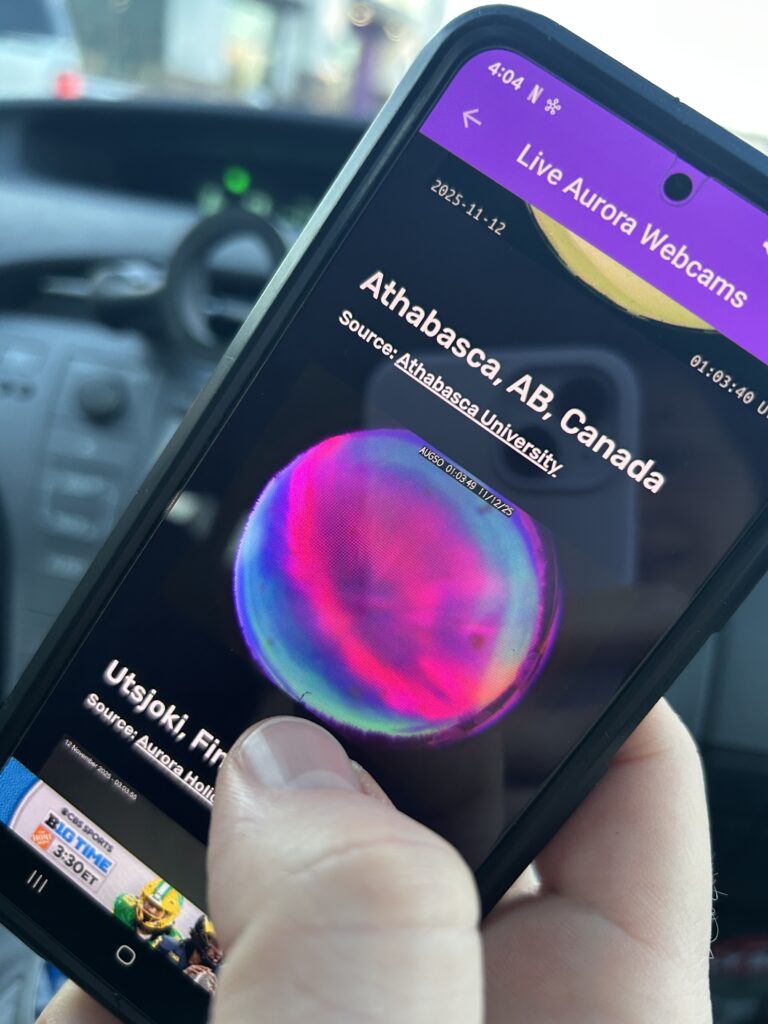
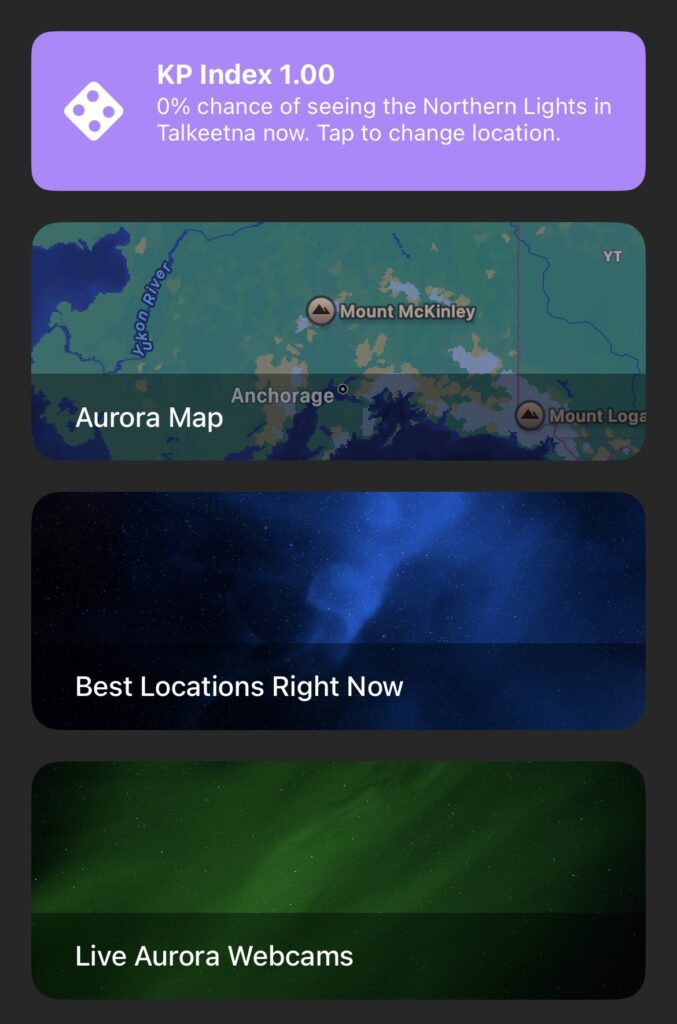

We love the Aurora app to keep an eye on the forecast. You can even turn on notifications for when conditions are favorable.
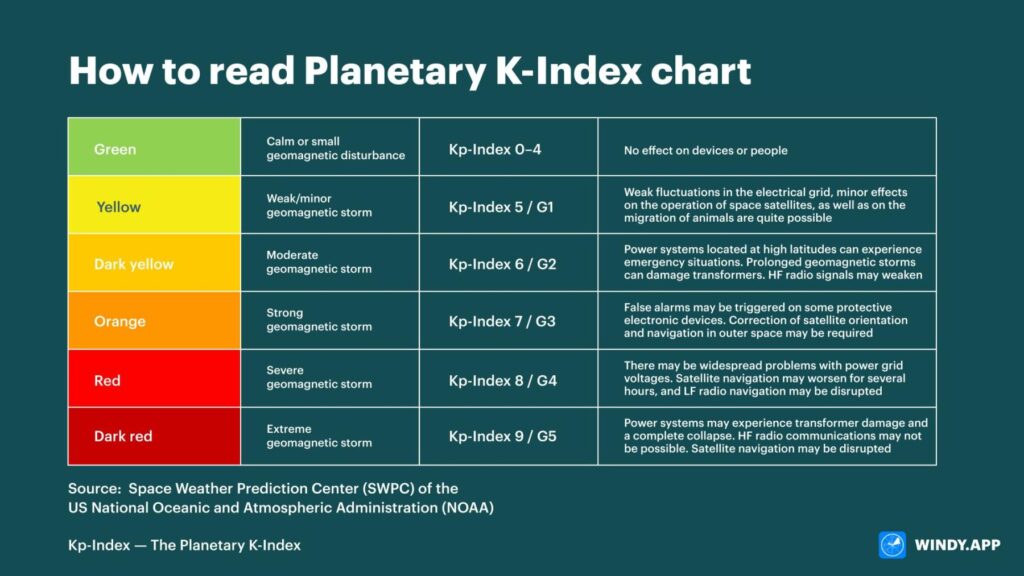
What Is the Kp Index?
If you’ve been researching the northern lights, you’ve probably heard people mention the Kp index.
It’s a measure of geomagnetic activity.
Generally speaking, higher Kp values can correspond with more widespread aurora visibility.
But a high Kp forecast does not guarantee an amazing show, and a lower Kp doesn’t necessarily mean you won’t see the lights, especially in northern Alaska.
It’s only one piece of the puzzle.
My advice? Don’t obsess over forecasts months before your elopement.
Use the long-term information to choose a promising season and location. Then pay closer attention to weather and aurora predictions as your wedding approaches.
How to Plan Your Actual Northern Lights Elopement Day
So what might your wedding day look like?
There isn’t one right answer, but here’s an example of how I might approach a winter elopement with an optional aurora photography session.
Sample Northern Lights Elopement Timeline
11:00 a.m. — A Slow Morning Together
Wake up in your cabin, make breakfast, drink coffee, and spend some time enjoying where you are.
There’s no need to rush into the day.
12:30 p.m. — Getting Ready
Get dressed, exchange letters or gifts if you’d like, and take some time to appreciate what’s about to happen.
1:30 p.m. — First Look and Portraits
Depending on the month and location, we’d plan around the available daylight.
We might photograph your first look, spend some time exploring, and enjoy the winter landscape.
2:30 p.m. — Your Wedding Ceremony
Exchange vows somewhere meaningful, surrounded by the scenery you traveled all the way to Alaska to experience.
3:00 p.m. — Celebrate!
Pop some sparkling cider, enjoy a picnic, or spend time together taking photographs.
4:30 p.m. — Warm Up and Enjoy Dinner
Head back to your cabin or a favorite restaurant.
Eat a wonderful meal, warm up, and relax.
7:00–9:00 p.m. — Rest and Prepare
Change into warmer clothing, charge devices, prepare your winter gear, and check the latest forecasts.
10:00 p.m.–1:00 a.m. — Optional Aurora Adventure
If the conditions are promising and it’s safe to go, head to our planned viewing location.
Maybe we get a sky full of northern lights.
Maybe we watch the stars together.
Either way, you’re ending your wedding day on an adventure.
Keep in mind: This is an illustrative timeline, not a universal winter schedule. In Fairbanks in December, daylight is extremely limited, and we’d plan your ceremony and portraits accordingly. Your actual itinerary would depend on your date, location, weather, and booked photography coverage.
Should You Book an Aurora Tour or Go With Your Photographer?
It depends on the experience you’re hoping to have.
An established aurora tour can be a wonderful option, particularly if you’re visiting Fairbanks and want access to a heated viewing location.
Some operators provide warm cabins, transportation, or guided viewing experiences.
But there are a few things to consider when incorporating an aurora tour into an elopement.
You may be sharing the experience with other visitors, and some tours have rules about commercial photography, private ceremonies, or bringing outside photographers.
If you’re hoping for a private exchange of vows or a dedicated portrait session, those details should be discussed with the operator before booking.
Alternatively, we can look into private locations and an independent photography plan, provided access and conditions allow.
For couples who love the idea of a cozy lodge, it may also be worth researching properties with dark skies and a private outdoor area.
One of the nicest options is being able to step outside when the aurora appears instead of driving long distances in the middle of the night.
What Should You Know About Transportation and Winter Driving?
If you’ve never visited Alaska in winter, please don’t underestimate this part of the trip.
Our distances can be considerable, cell service can disappear outside populated areas, and road conditions can change quickly.
A location that looks like a quick drive on Google Maps might be much more complicated in January.
Before booking your transportation, think about:
- Whether your rental vehicle has appropriate winter tires
- The rental company’s rules for unpaved or remote roads
- The distance between your lodging and viewing location
- How comfortable you are driving on snow and ice
- Whether your chosen location is maintained during winter
- What you’ll do if conditions make travel unsafe
You should also check Alaska 511 for official road conditions.
I strongly recommend keeping emergency supplies in your vehicle, including extra warm layers, water, snacks, a flashlight, and a winter emergency kit.
And please don’t stop on the shoulder of a dark highway just because you see the northern lights.
Use designated, safe pullouts and parking areas.
There are also locations that may not be accessible in winter, even if they look wonderful in summertime photographs.
This is one of the many reasons local planning experience is valuable.
Where Should You Stay for Your Northern Lights Elopement?
Your accommodations can make a huge difference in the overall experience.
I’d look for a place that offers more than somewhere to sleep.
Think about what you’d want the morning of your wedding to feel like.
Maybe it’s a cozy cabin with enormous windows, a fireplace, and a view of the mountains.
Maybe it’s a private lodge with an outdoor hot tub.
Or perhaps you’d prefer a beautiful vacation rental with enough room to get ready together and host a private dinner.
For an aurora-focused trip, I would pay special attention to:
Light pollution: Is the property surrounded by bright streetlights or neighboring buildings?
Outdoor visibility: Is there a clear view of the northern sky or are tall trees and mountains blocking much of it?
Accessibility: Can you reach the property safely in winter?
Distance: How far is it from your wedding ceremony location?
Warmth: Is there a comfortable indoor space nearby if you’re watching the aurora for several hours?
Property rules: Are outside photographers, small ceremonies, and nighttime photography permitted?
One thing I’d be careful about is assuming that an A-frame cabin or glass-roofed accommodation automatically offers great aurora viewing.
Those features can be lovely, but the property’s location, exposure, and surrounding lights matter far more.

What About Hair, Makeup, Flowers, and Wedding Details?
A northern lights elopement can still include all the personal touches you’d love to have on your wedding day.
You just need to plan for the season.
Hair and Makeup
Cold temperatures, dry air, snow, and wind can affect how your hair and makeup hold up.
If you’re hiring a professional, let them know you’ll be outdoors in winter conditions.
For a late-night session, bring whatever you’d need for touch-ups, especially lip products and anything affected by moisture.
Flowers
Fresh flowers can be particularly vulnerable to freezing temperatures.
Certain blooms may become damaged or discolored when exposed to severe cold.
For winter elopements, talk with your florist about hardy varieties and how long the bouquet can safely remain outdoors.
Dried or preserved arrangements may also be worth considering, depending on the look you’re going for.
Rings, Vows, and Personal Details
Keep your rings somewhere secure and easy to access.
If you’re reading handwritten vows outside, consider using a small vow book instead of loose sheets of paper that could blow away.
And if you’re planning a picnic, cake cutting, or champagne toast, think about whether it would be more enjoyable indoors.
There is absolutely nothing wrong with exchanging vows outside and then heading somewhere warm for the rest of your celebration.
How Do You Legally Elope in Alaska if You’re From Another State?
Here’s another piece of good news: You do not need to be an Alaska resident to get married here.
Couples traveling from other states can obtain an Alaska marriage license and legally marry in Alaska.
According to the State of Alaska, you’ll need to:
- Complete an Alaska marriage license application.
- Meet the identification and application requirements.
- Allow for the three-business-day waiting period after the issuing office receives your completed application.
- Obtain your marriage license before the ceremony.
- Have your marriage performed by someone authorized to officiate, with the required witness arrangements.
- Return the completed marriage paperwork so the state can register your marriage.
An issued Alaska marriage license is valid for 90 days, and the current application fee is $60 for standard processing.
You can find the official requirements through the State of Alaska Marriage License Office.
It’s important to plan your application timing carefully if you’re traveling from out of state, and to confirm the current requirements directly with the issuing office before your trip.
Do You Need an Officiant and Witnesses?
Yes, for a legal marriage you’ll need an authorized officiant and the witnesses required under Alaska law.
Depending on your ceremony plans, that might involve a religious leader, a marriage commissioner, or another person legally authorized to perform the marriage.
We’ll want to sort out those arrangements well before the wedding, particularly if you’re planning a small, remote ceremony.
And remember that officiant availability can affect how flexible your ceremony timing can be.
Do You Need a Permit to Elope Outdoors?
Sometimes!
Permit requirements depend on the location, land manager, group size, structures, and whether commercial photography is involved.
For example, Alaska State Parks currently has different rules for small ceremonies and larger organized events. Paid photographers may also need separate commercial-use authorization.
National parks and other public lands can have entirely different policies.
Never assume that a beautiful spot is automatically available for a wedding.
This is something I look into during the planning process, because the last thing you want is to arrive at your dream location and discover you’re not permitted to have your ceremony there.
What If the Northern Lights Don’t Appear on Your Wedding Day?
I want to spend a little time on this because I think it’s important.
You might travel all the way to Alaska, book a beautiful cabin, plan your elopement around aurora season, and still not see the northern lights.
I wish I could promise otherwise.
But here’s what I would encourage you to think about:
If the northern lights didn’t appear, would you still be excited about the wedding day you’re planning?
Would you love exchanging vows in the mountains?
Would you enjoy sitting together in a warm cabin after an incredible day, eating a delicious dinner and talking about your favorite moments?
Would you be excited to explore Alaska, spend uninterrupted time together, and begin your marriage with an adventure?
If the answer is yes, then I think you’re approaching your elopement in exactly the right way.
Because while the northern lights can make your wedding experience extraordinary, they don’t determine the meaning of the day.
You do.
And if the sky decides to put on a show, what an incredible gift that would be.
How Much Does a Northern Lights Elopement in Alaska Cost?
Your overall budget will depend on where you’re coming from, how long you’re staying, and the type of experience you’d like to create.
Some of the main costs to consider include:
- Flights to Alaska and any connecting flights
- Lodging for several nights
- Rental vehicles or private transportation
- Alaska marriage license
- Officiant and any required permits
- Elopement photography
- Hair, makeup, and flowers
- Wedding attire and proper winter clothing
- Aurora tours or private viewing accommodations
- Meals and any other Alaska adventures you’d like to include
A northern lights elopement can sometimes require a little more flexibility in your budget than a straightforward daytime ceremony.
For example, you might decide to book daytime photography plus a separate nighttime session.
You might also want several nights of lodging to increase your aurora-viewing opportunities.
And if your vision involves traveling to a more remote part of Alaska, transportation can become a significant part of the cost.
Rather than beginning with a generic wedding budget, I’d encourage you to think about what matters most.
Would you rather stay in a beautiful private cabin for a few nights or spend more on a luxury resort?
Are you hoping for one intimate day together or a multi-day wedding adventure?
Do you want to prioritize Fairbanks for northern lights opportunities, or would you prefer dramatic Southcentral Alaska scenery with a chance of seeing the aurora?
Those choices will help determine where to invest your money.
What Should You Pack for a Northern Lights Elopement?
Beyond your wedding attire, there are a few things I would absolutely recommend bringing.
Winter and outdoor essentials
- Insulated winter boots with good traction
- Warm, moisture-wicking base layers
- Insulated winter jacket
- Wool socks and extras
- Mittens and hand warmers
- Warm hats and neck protection
- Snow pants or insulated outer layers, if appropriate
- Headlamp or flashlight with extra batteries
- A small backpack for additional layers
- Snacks and a thermos with something warm to drink
Wedding essentials
- Wedding attire and any accessories
- Rings in a secure container
- Vow books
- Marriage license and identification
- Makeup or hair touch-up supplies
- A warm outfit for traveling between locations
- Comfortable shoes for changing into
- Any personal details you’d like photographed
Travel and technology
- Phone chargers and portable power banks
- Offline maps
- Camera or phone batteries kept warm when not in use
- Travel insurance documents, if applicable
- Reservations and vendor contact information saved offline
Cold temperatures can drain batteries much faster than you’re accustomed to, so having backups can be especially helpful.
And don’t forget to leave extra space in your luggage for those bulky winter layers!
Is a Northern Lights Elopement Right for You?
I think an aurora elopement is a wonderful fit for couples who love adventure and are comfortable embracing a little unpredictability.
You don’t have to be an experienced hiker or outdoorsperson.
You don’t need to climb a mountain in the middle of the night.
And you certainly don’t have to spend your wedding day freezing to have incredible photographs.
But you do need to be comfortable with the possibility that your plans may shift because of weather or aurora activity.
If your dream wedding involves being present with your partner, making meaningful memories, and experiencing something new together, Alaska offers some incredible possibilities.
The northern lights might become one of the most unforgettable parts of your wedding trip.
Or your favorite memory might turn out to be something entirely different.
That’s part of the beauty of creating a wedding experience that is truly yours.
Let’s Plan Your Northern Lights Elopement in Alaska!
If you’ve made it this far, I’m guessing the idea of an Alaska northern lights elopement has captured your imagination.
And I would love to help you explore what’s possible.
As an Alaska-based elopement photographer, I do so much more than show up and take pictures.
I help couples think through locations, timing, logistics, and how to build an experience that reflects who they are.
That includes being realistic about things like weather, travel, seasonal access, and the unpredictable nature of the aurora.
My goal is to help you create a wedding day that celebrates the commitment you’re making to each other, surrounded by some of the most beautiful places Alaska has to offer.
Maybe we’ll end the day beneath a sky full of northern lights.
Maybe we’ll exchange vows with snow-covered mountains in the background and spend the evening tucked into a cozy cabin.
Whatever your day ends up looking like, I want you to leave Alaska even more in love than when you arrived.
Ready to start planning?
Let’s talk about your Alaska elopement!
I’d love to hear what you’re dreaming up, even if you’re still figuring out where to begin.
— Alex


Comments